


There’s a lot more that goes into a Mines Rescue competition than setting up an emergency and seeing what the teams do. Months of planning, elaborate scenarios, and some very convincing casualties all went into putting teams through their paces at this year’s event.
Coordinating the competition was Mines Rescue Training Coordinator Craig Bates, who said the day had been around six months in the planning, with Mines Rescue and HVO working together to make it happen. Every scenario had to be reset exactly the same for each of the 11 teams while still being challenging enough to test them.
Craig has been involved in Mines Rescue competitions for around 35 years, starting out as an ERT member himself, and said that while it may only be a competition, the pressure on the teams is very real.
“I was exactly like these guys on competition days. Nervous, made mistakes. It’s the best place to learn how you respond under difficult situations.
“That’s what these competitions are about. You’re putting yourself under pressure, learning from the mistakes you make and seeing how other teams do things. You take those learnings back to training and you’re better prepared next time.”
One of those tests was a working at heights scenario, where teams had to rescue a worker suspended from the side of a structure. Mines Rescue Training Officer Brad McGrath was assessing the challenge and said it pushed teams to apply familiar skills in an unfamiliar situation.
“The skills are the same, but today they’re using them in a different way that potentially they haven’t practised before.
“We never want this to happen to somebody, but if it did, that’s why the teams exist on sites. They’d be expected to show up to a place just like this. This is the test – can you do it or not? If you can’t, that’s okay, because it gives you something to train for next time you come back to the station.”
While much of the history of Mines Rescue is associated with underground mining, this year’s centenary celebrations also provided an opportunity to look back at the open cut side.
Hunter Valley Mines Rescue Regional Manager Matt Enright told those gathered at the presentation dinner that open cut Mines Rescue training began out of Abermain Rescue Station in 1980, with the first Open Cut Mines Rescue Competition held in 1982 at Saxonvale Mine.
Warkworth was one of the teams competing in those early years, making MTW’s win this year a fitting link back to the competition’s beginnings.
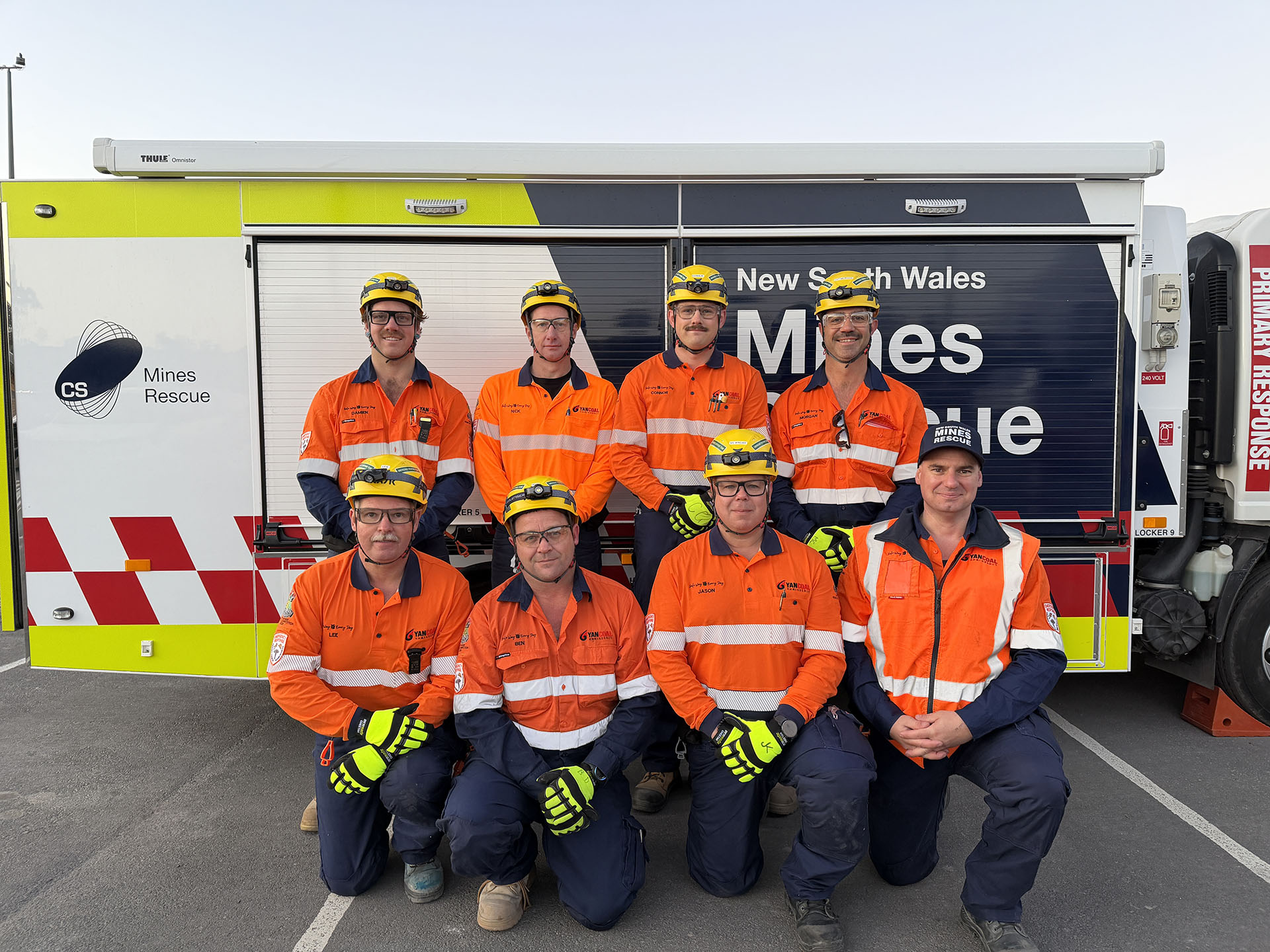
MTW team captain Morgan Creagh credited the win to the work the team had put in, though said there is always more to learn.
“Super happy with the effort. The dedication and effort put in every time, there’s no cheat codes. Turn up every day and build on it year on year.
“I’m sure everyone out there has got some situation or scenario from today that they could have done better. It gets burnt into the back of your brain and you’ll remember that forever.”
Share this page
This website uses cookies to ensure you get the best experience on our website. Learn more.
Register for News
Stay up to date with all the latest news, events and announcements from Coal Services